
Overview
Cañada College Umoja Community
The Cañada College Umoja Community is a learning and transfer support program designed to enhance the educational experiences of African American and Black students by implementing pedagogical principles and practices that benefit all students. The concept of umoja, a Kiswahili word meaning “unity,” is central to the program’s philosophy and organization.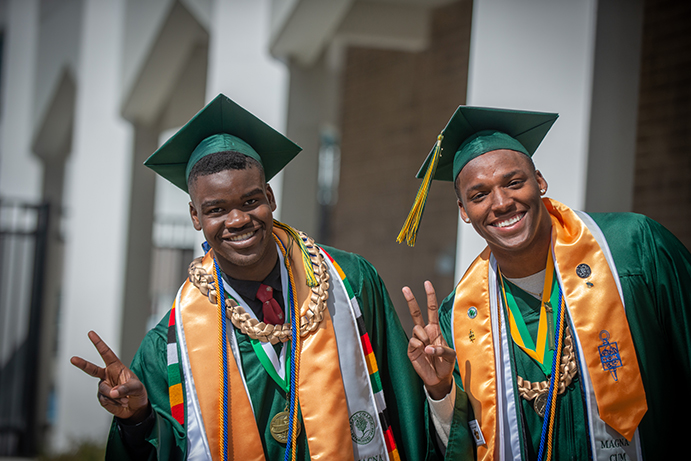
With a focus on the cultures, histories, literatures, and identities of Africans and the African American diaspora and a commitment to addressing the individual needs of every student, Cañada College Umoja actively promotes student engagement and success. Members of Cañada College Umoja Community can access wrap-around support services, including a dedicated academic counselor and retention specialist, Admissions and Records/Financial Aid and SparkPoint assistance contacts, and financial support for books and transportation. In addition to field trips, workshops, campus visits, and cultural events, Umoja students are provided with a dedicated study and hangout space called the Village, currently located in building 3, room 103 (3-103). This space is located next door to the Umoja Program classroom (3-104).
The Cañada College Umoja Program includes a cohort-based academic program that links Political Science, Math, and English classes in a two-semester sequence. In the fall, students register for POLS C1000 (American Politics), STAT C1000 (Introduction to Statistics) and ENGL C1000 (Academic Reading and Writing). During the spring semester, students continue with POLS 310 (California Politics and Local Government) and English C1001 (Critical Thinking and Writing) and an Ethnic Studies Course of their choice. Eligible students will enroll in the English and Political Science classes concurrently each semester, and some of the field trips and other activities will be directly integrated into the curriculum of these courses.
The Umoja Program is designed for students who:
- Are motivated to complete a certificate, associate's degree, and/or transfer to a four-year college or university
- Are interested in learning about Pan-African contributions in all subject matters.